





As a journalist covering the cannabis landscape for over five years, I’ve reported on a number of regulatory changes and medical achievements in the space. Over the last decade, the U.S. cannabis industry exploded, evolving from a stigmatized underground market into a fully fledged consumer sector.
Just recently, Target expanded its hemp-derived THC beverage footprint to over 300 stores across Texas, Florida, and Illinois. It is a milestone that confirms the industry has secured permanent, mainstream visibility.
Yet, beneath that high-profile shelf space lie certain challenges. While the demand for both hemp and marijuana products remains high across the country, according to The First Citizens February 2026 State of the Cannabis Industry report, the cannabis industry recorded its first revenue drop after a decade of growth.
Per the report, 2024 sales reached $30.1 billion, but 2025 revenues dipped to an estimated $28.6 to $29.6 billion.
Industry analysts explain that the market has matured and is now dealing with massive oversupply challenges.
“Oversupply is the biggest issue cannabis companies have, and it extends throughout the supply chain,” Ben Burstein, the corporate development manager for cannabis B2B technology platform LeafLink, told Supply Chain Brain.
Consequences include many consolidation moves in the space and closures.
Frederico Gomes, director of institutional research and life sciences at ATB Cormark Capital Markets confirmed to BNN Bloomberg that “many stores have closed. The market has rationalized.”
In the latest development, a major cannabis supply chain provider confirmed a closure of several stores.
GrowGeneration closed four stores in the first quarter of 2026
One of the nation’s largest hydroponics suppliers, GrowGeneration, recently reported its financial results for the first quarter of 2026, revealing net sales of $38.4 million, up 7.5% year over year.
GrowGeneration Q1 earnings highlights:
- Gross profit margin was 25.4%, compared to 27.2% for the first quarter of 2025.
- Net loss amounted to $4.9 million, versus a net loss of $9.4 million in the same quarter of the prior year.
- Total operating expenses decreased $4.6 million, or 23.4%, to $15.0 million in the first quarter of 2026.
- Cash, cash equivalents, and marketable securities of $41.1 million and no debt.
Source: GrowGeneration press release
The ancillary cannabis company offering a range of hydroponic and organic gardening supplies also develops and manufactures its own proprietary brands to sell alongside major third-party equipment.
Its offering spans across advanced LED lighting (e.g., Ion lights), environmental controls, and automated watering systems designed for large-scale indoor and greenhouse commercial cannabis facilities.
The results revealed that GrowGeneration closed 4 stores in the first quarter, bringing the total number of closures to 12 over the past 12 months.
Why has GrowGeneration been closing stores and how has it impacted its business
During the earnings call, GrowGeneration’s CEO Darren Lampert commented on the company’s efforts to downsize to a “smaller and more efficient footprint” to deal with financial pressures.
“Over the past several years, we have transformed GrowGeneration into a more focused and efficient business,” Lamptert said during the earnings call, as per the transcript provided by Insider Monkey.
The closures haven’t negatively affected the quarterly earnings.
“First quarter revenue exceeded our expectations and marked our second consecutive quarter of year over year revenue growth. Despite operating with a smaller and more efficient footprint,” Lampert added.
More Retail:
- Another mall retailer quietly closed over 150 locations
- Ultra wealthy shoppers flock to this 63-year-old rugged retailer
- 72-year-old mall retailers to close more stores in 2026
GrowGeneration Chief Financial Officer Gregory Sanders focused on the closures: “I think what you saw in the first quarter was we closed 4 stores, and it had a point and a half impact on margin. So slightly lower than expectation. But I think the good news is as we look at the remainder of the year, we have less store closures scheduled as of this point in time.”
It appears that previous closures served the purpose and Sanders confirmed that there shouldn’t be as many closures as in the first quarter in the next three quarters combined.
Two major updates in the cannabis/hemp sector
There’s a saying that for the cannabis industry, the only constant is change. The addage is true, as over the five years I extensively covered the space, there were daily updates on regulation, laws, technology, medical breakthroughs, and public sentiment.
That’s still the case. Just last year, two major updates happened. First, when in November 2025, Congress passed and President Donald Trump signed the government funding package ending the longest government shutdown in the US history, “and, in doing so, enacted the most consequential federal change to hemp policy since the 2018 Farm Bill, poised to upend a $28 billion industry,” according to Akerman.
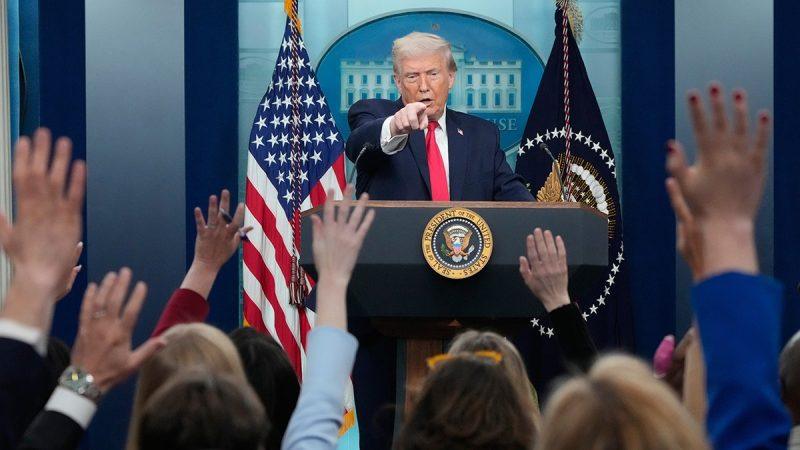
Second, on December 18, 2025, Trump signed an “Executive Order that will improve medical marijuana and cannabidiol research to better inform patients and doctors. The Order directs the Attorney General to expedite completion of the process of rescheduling marijuana to Schedule III of the Controlled Substance Act,” according to White House.
What this basically means is that we have two laws that would make significant impacts on the industry, but opposite ones:
- Rescheduling could substantially reduce the major finance hurdle for qualifying medical cannabis operators (though broader implementation questions remain unresolved). For decades this tax rule prohibited any business dealing in Schedule I or II substances from taking ordinary corporate tax deduction, meaning payroll, rent, marketing, and utilities could not be deducted.
- Under the new law federally legal hemp can’t contain more than 0.4 milligrams of total THC per container, cannabinoids regardless of concentration, that are synthesized or manufactured outside the cannabis plant, and cannabinoids with “similar effects (or marketed as having similar effects)” to THC, according to Akerman.
“This will kill the hemp industry as we know it. We’re talking about wiping out thousands of businesses and hundreds of thousands of jobs,” Jonathan Miller, general counsel for the U.S. Hemp Roundtable warned of the bill’s massive impact on the industry, reported MichealBest.
Despite the ever changing environment, the industry has been booming and the public acceptance has nearly reached the mainstream, which is why the space is now facing an ordinary problem seen across many other industries: oversupply.
Related: Cannabis company abruptly closes all stores amid lawsuits
What the GrowGeneration store closures mean for the industry and consumers
While GrowGeneration is not a cannabis grower or seller, its connection to the industry is important as it provides the equipment necessary for the plant’s cultivation. This basically means that, while a typical consumer might not immediately feel the effect of GrowGeneration’s closings, cannabis growers just might.
As the nation’s largest specialty hydroponic distributor managing over 10,000 SKUs, GrowGen acts as the ‘picks and shovels’ backbone for an industry where indoor cultivation commands a massive 51% of the market, according to data from SNSInsider.
Even though cannabis is known to grow in the wild on its own, cultivating high-yielding plants requires delicate and meticulous care. Marijuana is considered an exceptionally sensitive plant , meaning slight mistakes in watering, nutrients, or environmental controls can easily stunt growth or invite disease.
Professional and adequate equipment for commercial growing is a necessity, and the lack of it would significantly slow down the industry.
On the other hand, if the industry is experiencing oversupply issues, then the cultivation should be reduced to equal it with the demand. GrowGeneration early results suggest that downsizing has worked out.
It aligns perfectly with the macro view of chief cannabis economist Beau Whitney, who recently noted that operators must “decrease supply to bring price equilibrium back into focus,” according to MJBizCon.
According to Whitney, the US cannabis market is producing six times more cannabis than it can consume, with a capacity of 112 million pounds, versus a legal demand of just 20 million pounds.
This oversupply has led to significant price compression, squeezing margins for operators.
GrowGeneration’s CEO Lampert believes the industry is already starting to recover from these issues, as various multi-state operators are reporting that “supply demand is starting to come into balance.”
“With rescheduling on the medical side, there is talk about you know, some certain of our companies, the MSOs, exporting cannabis over into the European markets. Which will bring, again, less supply offline here So, hopefully, prices stabilize to start going back up,” Lampert said.
Lampert highlighted that there’s going to be a tremendous sea change in the industry, and that from the equipment side of it “GrowGen’s going to lead it,” as it has tremendously changed the business going from 65 to 19 facilities in the last couple of years.
Bottom line, this downsizing might just be what the mature industry needs to continue to thrive.