




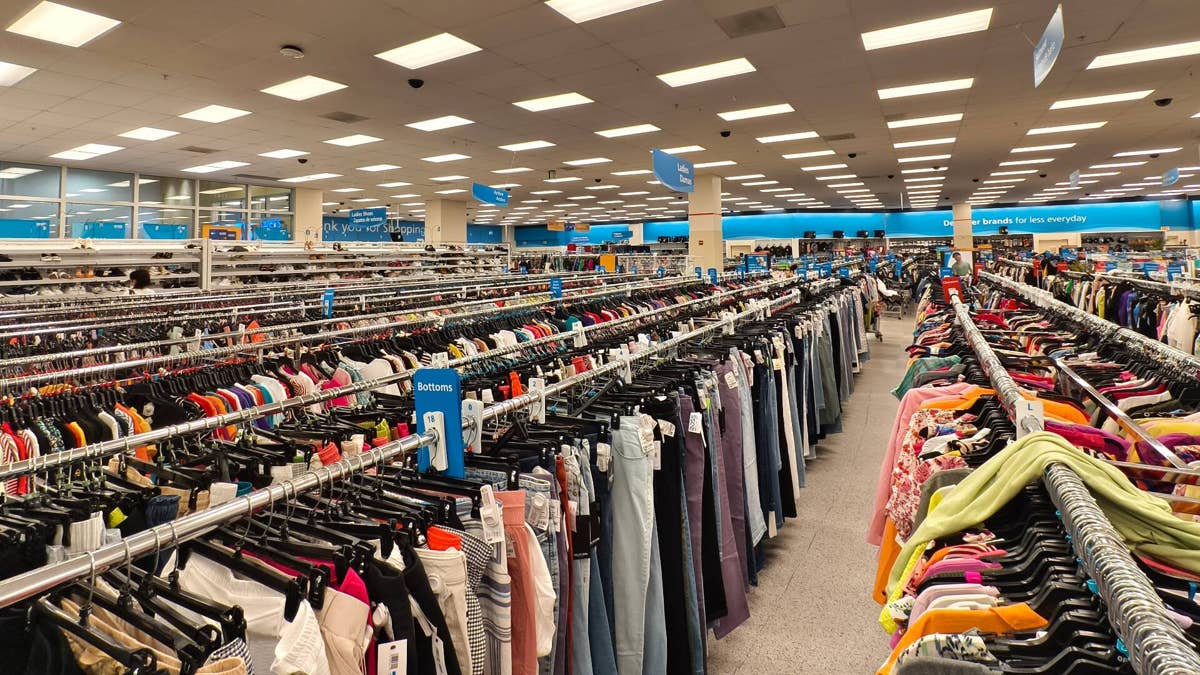

Ross Stores has seen stronger consumer demand in recent months as more shoppers hunt for lower prices. In response to this heightened momentum, the company’s CEO is planning to roll out a major in-store change that risks hindering this growth.
The first few months of 2026 have been profitable for Ross, which also owns DD’s Discounts. In the first quarter of this year, the company saw a 17% year-over-year increase in its comparable store sales, according to its latest earnings report.
Its operating income also spiked by 32.6%, compared to the same quarter in 2025. Foot traffic in its stores also ticked up. Overall customer visits in Ross locations rose by a whopping 18%, according to a recent Placer.ai report.
Lila Margalit, content manager at Placer.ai, wrote in the report that off-price retailers like Ross are outpacing department stores in foot traffic growth.
“Off-price’s momentum is most visible in its widening lead over department stores,” wrote Margalit. “The category captured 65.7% of combined visit share in Q1 2026, up from 62.2% in Q1 2025 and just 56.2% in Q1 2022.”
“These steady, multi-year gains underscore a structural shift in where consumers are choosing to shop – one that continues to accelerate as value becomes a central decision driver,” she continued.
Ross Stores CEO plans controversial store change as demand rises
During the chain’s first-quarter earnings call on May 22, Ross Stores CEO James Conroy attributed a portion of the company’s sales growth during the first quarter to an “increase in tax refunds.”
“The comp (comparable sales) increase was primarily driven by a growth in transactions, and we saw healthy increases in customer count on a comp store basis across income levels, ethnicities, and all age groups, including the young customer,” he said.
Conroy also said that Ross is “outperforming” its competitors in attracting younger customers aged 18 to 24. During the quarter, the company saw the strongest sales growth in its ladies’ and cosmetics categories as more of these customers entered its stores.
Amid increased consumer demand, Conroy said the company is confident it can expand its price points, including introducing higher-priced items in stores.
Related: Ross Stores CEO eyes a change that could drive away shoppers
“So we have to ensure that we are in stock with sort of the best bargains across price points, but certainly the good price points,” he said. “But then, when we look at our data, our customer KPIs (key performance indicators) are unbelievable, right? More customers shopping more frequently and spending more on each trip.”
“So now we are trying to find if there is even some more opportunities to stretch our prices not on same goods, but on new brands and new goods,” he continued. “And really just deliver even a broader assortment for our customers out there.”
Conroy emphasized that the company’s goal is to deliver the “best bargains and best values” to customers, especially those under financial pressure. However, the company has a “growing customer base that seems to be responding across good, better, and best.”
His comments follow his first tease of this pricing change during the company’s earnings call in March.
“I think if we had a learning coming out of the quarter (fourth quarter of 2025), it is that we probably have the ability to push for some either higher-priced goods or potentially taking some retails up,” said Conroy at the time.
Why this pricing change could risk sales growth
Ross’ push to roll out higher-priced items in stores could be a risky move as it threatens to push away price-sensitive shoppers.
As consumers feel the weight of inflation, tariffs and housing affordability challenges, they are cutting back their spending on discretionary items and are searching for more deals and discounts, according to a recent survey from A&M Consumer and Retail Group.
How Americans plan to cut spending in apparel, footwear and beauty:
- Approximately 48% of consumers are pulling back on apparel spending, while 22% are prioritizing value.
- To reduce their spending on clothing and footwear, 49% are buying fewer items, 32% are taking advantage of sales and promotions, and 25% are making less impulse purchases.
- Also, 50% of consumers said they are cutting clothing and footwear spending due to budget and income changes.
- Another 50% flagged price increases and weak sales promotions as the reasoning behind this spending reduction.
- Consumers are also cutting back on beauty purchases. Roughly 35% are buying fewer items, while 65% are switching brands and retailers in search of lower prices.
Source: A&M Consumer and Retail Group
“Today’s consumers aren’t simply tightening their belts – they’re making thoughtful tradeoffs,” said Chad Lusk, managing director at A&M Consumer and Retail Group, in a statement to Chain Store Age. “They’re cutting back on volume and dramatically changing shopping routines to stretch their wallets.”
Ross Stores bets big on rising consumer demand
As Ross plans to introduce higher-priced merchandise in its stores amid increased consumer demand, it is also expanding its retail footprint rapidly, especially in newer areas such as the Northeast.
The company plans to open 110 new stores nationwide this year, comprising of 85 new Ross locations and 25 new DD’s Discounts stores.
Amid this expansion, Ross expects comparable store sales growth for fiscal year 2026 to increase by 6% to 7%.
More Retail:
- Target sees unexpected shift in customer behavior
- Publix faces consumer boycott threat after store policy change
- Ross Stores CEO eyes a change that could drive away shoppers
“We are raising our fiscal 26 sales and earnings guidance to reflect the exceptional first quarter results and the solid second quarter guidance,” said Ross Stores Chief Financial Officer William Sheehan during the earnings call.
The increased confidence in sales growth comes as consumers face rising gas prices, further threatening retail sales. However, Ross Stores Chief Operating Officer Michael Hartshorn said during the call that this could benefit the company.
“I would say on fuel costs, generally, historically, it is been hard for us to see any immediate direct correlation between fuel prices and our sales performance,” said Hartshorn. “That said, obviously, the potential impact can vary based on the magnitude and how long the increased fuel prices last.”
“I would also add the silver lining for off-prices that any uncertainty in the macro environment could lead to customers taking more value when shopping and create closeout opportunities for us for the supply set,” he added.